روتين الشعر المجعد: خطوات ودليل
A curly hair routine is the repeatable sequence of wash-day and between-wash steps that turns product guesswork into consistent curl definition. Building a curly hair routine that actually holds up means matching that sequence to your curl pattern, porosity, and density instead of copying whatever worked on a stranger's hair online.
This guide covers the full wash-day sequence, a simple starting point for beginners, how to adjust for curl type 2A through 4C, and how porosity changes what "correct" even looks like. It ends with the mistakes that quietly wreck an otherwise decent routine and how a Curltine scan can shortcut the trial-and-error part.
Quick answer: A curly hair routine is a repeatable wash-day and between-wash system: cleanse, condition, apply leave-in, style, dry, and protect overnight, tuned to your curl type and porosity. Beginners keep it to four products, run it twice without changes, then adjust one variable at a time.

What is a curly hair routine?
A curly hair routine is the set of steps you repeat on wash day, plus the lighter maintenance you do on the days in between. It is not a single miracle product or a strict list of banned ingredients; it is the order of operations and the amount of product, both of which matter more than brand names.
Two things get confused here constantly. A wash routine is the full cleanse-to-dry sequence, done every few days. A refresh routine is the shorter, lighter version you do between washes to revive clumps without a full rewash. Most people who say their "routine isn't working" are actually missing one or the other, not both.
Your starting point should be your curl pattern, checked against a curl types chart from 2A waves to 4C coils. If you're not sure where you land, find your curl type at home before you buy anything. Pattern alone won't tell you the whole story, but it narrows the product weight you should be reaching for.
A routine is also different from a single product test. Trying one new gel on one wash day tells you almost nothing, because small variables like how wet your hair was, how much product you used, and the day's humidity can shift the result on their own. A routine holds most of those variables steady across several washes so the one thing you're testing actually shows up in the outcome. That's the difference between "this brand doesn't work for me" and "this brand didn't work under conditions I never controlled for."
Curly hair routine steps (wash day)
Here is the standard sequence. Skipping the order, styling before conditioner is fully rinsed out, for example, is one of the most common reasons curls look flat or crunchy by afternoon.
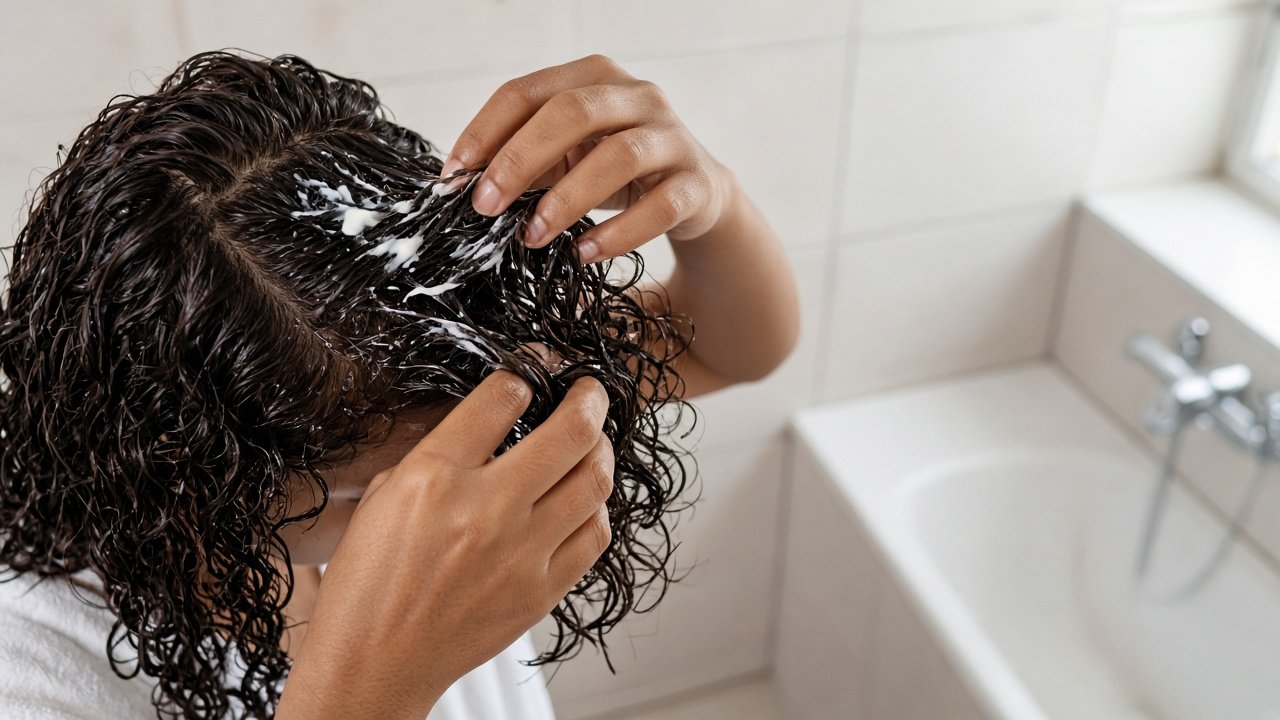
- Detangle first, on dry or damp hair. Finger-detangle or use a wide-tooth comb before you add water, working from ends to roots. Starting here instead of after conditioner cuts down on breakage for finer or more fragile patterns.
- Cleanse with a sulfate-free or low-sulfate shampoo. Focus on the scalp, not the length. Most curl types need this one to three times a week; wash frequency depends more on scalp oil and porosity than on a universal rule.
- Condition and detangle again while hair is slippery. This is the easiest window to remove remaining knots. Leave conditioner on for a few minutes if your porosity runs high or medium; low porosity hair often does fine with a quick rinse.
- Apply leave-in to soaking-wet hair, section by section. Water content at this stage decides how far the product spreads and how much curl clump forms underneath it.
- Layer your styler (gel, cream-gel, or mousse) before hair starts drying. Apply in the same soaking-wet state as the leave-in. Scrunching, raking, or shingling technique matters less than getting product on before hair air-dries partway.
- Dry without touching mid-process. Diffuse on low heat with a diffuser attachment, or air dry and leave the curls alone. Touching, re-scrunching, or checking curls while they're still wet breaks the cast and causes frizz.
- Protect overnight. A satin bonnet, silk pillowcase, or pineapple technique keeps friction and flattening from undoing what wash day just built.
A full wash day usually runs 45 minutes to two hours depending on length, density, and whether you're deep conditioning. Coilier and thicker patterns sit at the longer end because detangling and product application take more time section by section; finer or shorter waves move through faster. Neither pace is wrong — rushing the wet-application steps is what causes problems, not the total clock time.
For a deeper breakdown of timing and product order within each step, see the full wash day routine guide.
Curly hair routine for beginners
If you're starting from zero, resist the urge to buy a full shelf on day one. Four products cover the job: a gentle cleanser, a conditioner, a leave-in, and one styler with hold. That's it for the first month.
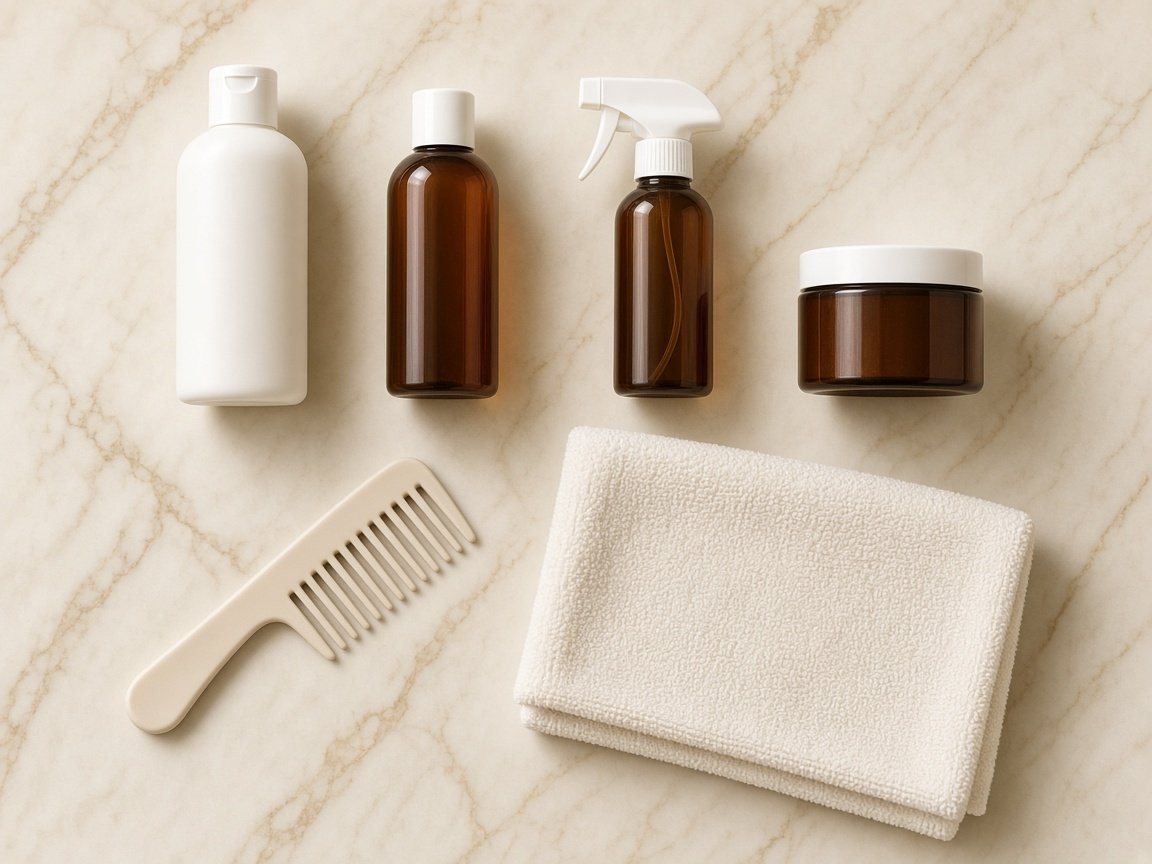
Run that exact lineup for two full wash cycles before changing anything. Most people quit a product after one bad wash day, but a single result doesn't tell you much — a bad detangling session, wrong amount, or a humid afternoon can all look like "the product doesn't work" when the real issue is technique or timing.
A few beginner-specific notes:
- Product amount beats product choice for most early frustration. Too little leave-in on soaking-wet hair causes dryness that looks like a bad ingredient match; too much causes limpness that looks like the opposite problem.
- You don't need the Curly Girl Method to succeed. CGM (avoiding sulfates, silicones, and heat styling) works well for many patterns, but it isn't a requirement. If you're curious, the Curly Girl Method guide covers what it actually restricts and why.
- Change one variable per wash cycle. New shampoo this week, new styler next week — not both at once. That's the only way to know what actually helped.
- Expect an adjustment period. Curls that have been through heat styling, straightening, or heavy product for years often need several washes before they show their real pattern.
Keep the first month to budget drugstore basics if cost is a factor — a cleanser, a conditioner, and one leave-in or styler you double up as both while you learn your hair. Skip the multi-step haul until you know your porosity and density well enough to justify a dedicated protein treatment, a separate curl cream, and a separate gel. Buying the full shelf before your first two wash cycles just means more product to rule out when something goes wrong.
Curly hair care routine by curl type (2A–4C)
Pattern changes how much weight your hair can carry before it goes flat, stringy, or weighed down. This table gives a starting point for each type; follow the links for a full care guide and a sample weekly schedule.
| Type | Family | Care focus | Type guide | Weekly routine |
|---|---|---|---|---|
| 2A | Wave | Light mousse or foam, minimal weight | 2A guide | 2A weekly routine |
| 2B | Wave | Light-to-medium gel, anti-humectant on humid days | 2B guide | 2B weekly routine |
| 2C | Wave | Define without crunch, watch buildup | 2C guide | 2C weekly routine |
| 3A | Curl | Moisture plus light hold | 3A guide | 3A weekly routine |
| 3B | Curl | Medium hold, anti-frizz layer | 3B guide | 3B weekly routine |
| 3C | Curl | Moisture-heavy, gentle detangling | 3C guide | 3C weekly routine |
| 4A | Coil | Moisture retention, low manipulation | 4A guide | 4A weekly routine |
| 4B | Coil | Seal moisture in, protective styles | 4B guide | 4B weekly routine |
| 4C | Coil | Intensive moisture, minimal manipulation | 4C guide | 4C weekly routine |
The gap between the top and bottom of that table is bigger than most routine advice admits. A 2A wave treated with 4C-level product weight will look greasy and flat within a day. A 4C coil treated with 2A-level product will stay dry and prone to breakage no matter how consistent the schedule is. Match the row before you match the influencer.
Adjust your routine for porosity
Porosity, how easily your cuticle lets moisture in and keeps it there, changes product weight and timing as much as curl pattern does, sometimes more. If you haven't checked yours, run a hair porosity test before you keep guessing.
Low porosity hair resists absorption, so product tends to sit on top and build up. Favor lighter layers, warm water to help the cuticle open, and a clarifying wash on a set cadence. The full breakdown is in the low porosity routine.
Medium porosity hair absorbs and holds moisture reasonably well and usually tolerates the standard sequence above without heavy adjustment. It's the porosity level most generic routine advice was written for, which is part of why low and high porosity readers get frustrated following it.
High porosity hair absorbs fast but loses moisture just as fast, so sealing matters more than piling on leave-in. Protein treatments on a schedule and heavier sealing oils help here. See the high porosity routine for the full sequence.
Density complicates the picture further. A low porosity, high density head needs light product spread across a lot of strands, which is a different problem from low porosity, low density hair that just needs less product overall. If your routine still misbehaves after adjusting for porosity alone, density is usually the missing variable.
Refresh days between washes
A refresh is not a smaller wash day. It's targeted: a light mist of water or diluted leave-in on flattened or frizzy sections only, then scrunched back into shape without touching the rest of your head. Over-refreshing every section daily usually causes the same buildup problem as over-washing.
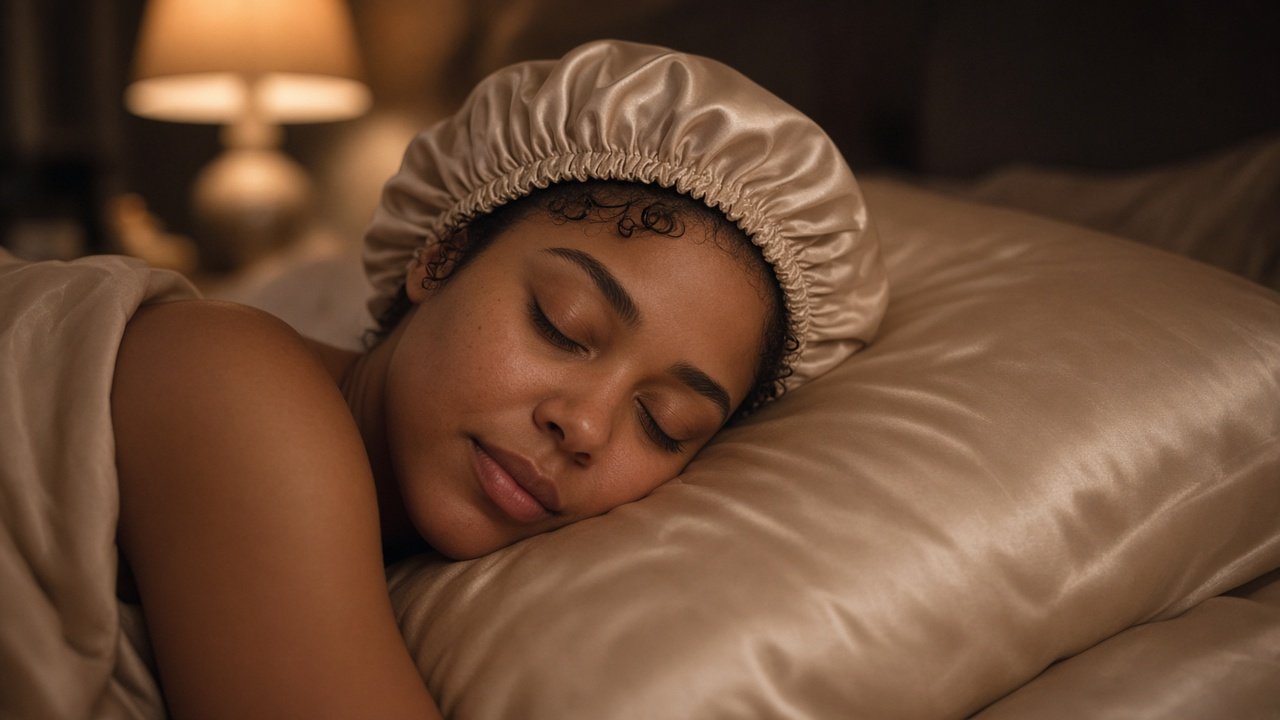
Two things extend a refresh's results more than any spray bottle formula. First, sleep protection — a satin bonnet, silk pillowcase, or pineapple set correctly the night before, covered in how to sleep with curly hair. Second, matching your refresh product to the humidity you'll actually face that day rather than what worked last week.
Common curly hair routine mistakes
A handful of mistakes account for most of the "my routine stopped working" complaints. The curly hair mistakes guide covers a longer list; these are the ones tied directly to routine structure:
- Overloading product without enough hold to match it. Rich creams and butters stacked without a gel or cream-gel underneath collapse by midday on finer or looser patterns.
- Chasing an influencer's exact routine instead of your own porosity and density. A routine built for high porosity, low density hair rarely transfers cleanly to low porosity, high density hair, even at the same curl type.
- Ignoring porosity entirely and troubleshooting with curl type alone. Two people with identical 3B curls can need close-to-opposite product weight if their porosity differs.
- Treating frizz as a product problem only. Sleep friction, wrong drying technique, and humidity mismatch cause as much frizz as the wrong gel. The frizzy curly hair fix guide walks through all five levers, not just products.
- Changing five things after one bad wash day. You lose the ability to tell what actually caused the improvement, or the regression.
- Applying styler to hair that's already started drying. Even ten extra minutes of air exposure before you apply gel changes how well it distributes and how strong the resulting cast holds.
- Skipping protein and moisture balance checks. Curls that feel gummy and stretch too much are usually moisture-heavy; curls that feel stiff and snap are usually protein-heavy. Guessing which one to add next without checking tends to make the imbalance worse.
Products — textures over brands
Brand names sell routines; textures and formulas actually run them. A cream-gel does a specific job (definition plus light hold) regardless of which company bottled it, and swapping brands within the same texture category rarely changes your results much. Swap the category instead (cream-gel for a thin, low-hold gel, or a rich butter for a light lotion) and almost everything about the result changes.
Read past the marketing copy on the front of the bottle. Ingredients are listed roughly by concentration, so what sits in the first third of the list tells you more about a product's actual job than the front-label claims do. Check where sulfates, heavy silicones, and drying alcohols land relative to your porosity and goals — a silicone buried near the bottom of a long list behaves very differently than one listed second. If that sounds tedious by hand, the ingredient checker breaks down what to look for, and Curltine's product scanner runs that same check against your specific hair profile in seconds.
Once your product textures are dialed in, start your free Curltine scan to get flags on your current lineup instead of guessing which bottle is holding you back.
Personalize your curly hair routine with Curltine
Everything above gets you a solid generic starting point. Curltine's job is to close the gap between "generic starting point" and "routine built for your actual hair."
- Scan. One photo of dry, product-free hair reads curl pattern, porosity signals, density, and frizz clues.
- Get a profile. Curltine turns that scan into readings across all four traits instead of a single letter grade.
- Get a wash-day plan. Steps, product-type guidance, and timing come from your profile, not a generic template.
- Adjust as you go. Log results, scan new products against your profile, and get weather-based tips when humidity or dry air shifts what your curls need that day.
It's a starting plan you refine, not a one-time fix. Start your free scan or get the curly hair scanner details before your first photo.
None of this replaces paying attention to your own hair over a few weeks. What Curltine changes is the starting point: instead of guessing a curl type from memory and picking products by review count, you get a profile-based plan on day one, then real adjustments as your results and the weather change. The routine still has to be run consistently for it to mean anything — no scan does that part for you.
Frequently asked questions
What is the best hair care routine for curly hair?
The best routine matches your curl pattern, porosity, and density instead of copying someone else's steps. Most curl types do well cleansing one to three times a week, conditioning every wash, applying leave-in and styler to soaking-wet hair, then drying without touching the clumps. Porosity sets product weight; consistency sets the results.
How do I do a curly hair routine?
Wash with a sulfate-free or low-sulfate shampoo, condition and detangle while hair is still slippery, then rinse. Apply leave-in and a gel or cream-gel to soaking-wet sections. Dry by diffusing on low heat or air-drying without disturbing the curls, then protect them overnight with a satin or silk cover.
How do I start a curly hair routine?
Start with four products: a gentle cleanser, a conditioner, a leave-in, and one styler with hold. Run that same lineup for two full wash cycles before changing anything. Most rough first attempts come from buildup or technique, not from the wrong ingredients.
What are curly hair routine steps?
The standard sequence is detangle, cleanse, condition, apply leave-in, apply styler, dry, and protect overnight. Every step except the last happens on wet or damp hair. Styling before conditioner is fully rinsed out is a common reason curls fall flat by afternoon.
How often should I wash curly hair?
Most curl types do well washing every three to seven days. Looser waves usually need more frequent washes; tighter coils can often go longer between them. Let scalp itch, product buildup, and clump quality set your schedule instead of following a fixed number.
Do 2A and 4C need different routines?
Yes. 2A waves need light products and minimal weight to avoid going flat, while 4C coils need heavier moisture sealing and gentler detangling to prevent breakage. The wash-day order stays similar, but product amount, technique, and wash frequency shift a lot between the two ends of the chart.
Can an app build my curly hair routine?
Yes, within limits. Curltine reads curl type, porosity, and density from a photo scan and turns that into a wash-day plan with product-type guidance, then adjusts it as you log results and as weather changes. Treat it as a starting plan you refine, not a guaranteed fix on the first try.
Is CGM required?
No. The Curly Girl Method (avoiding sulfates, silicones, and heat styling) helps many curl types hold moisture and definition, but it isn't a requirement for a working routine. Some high-porosity or protein-sensitive hair actually does better with occasional clarifying shampoo or light silicones than a strict CGM approach.
Related guides
- Curl types chart (2A–4C)
- Wash day routine
- Hair porosity test
- Curly hair mistakes
- How to fix frizzy curly hair
Build the routine, then let Curltine fine-tune it
A generic curly hair routine gets most people most of the way there. Start your free Curltine scan to see your actual curl type, porosity, and density, or get the app on iPhone and Android.
This guide covers cosmetic hair care only and isn't medical advice. See a dermatologist for ongoing scalp irritation, unusual shedding, or hair loss.
Curltine
احصلي على روتين تجعيدك المخصص
امسحي شعرك بالذكاء الاصطناعي خلال 60 ثانية واحصلي على خطة يوم غسيل تناسب نوع شعرك ومساميته وكثافته.
ابدئي خطتك