Curl Types Chart (2A–4C): Find Your Pattern
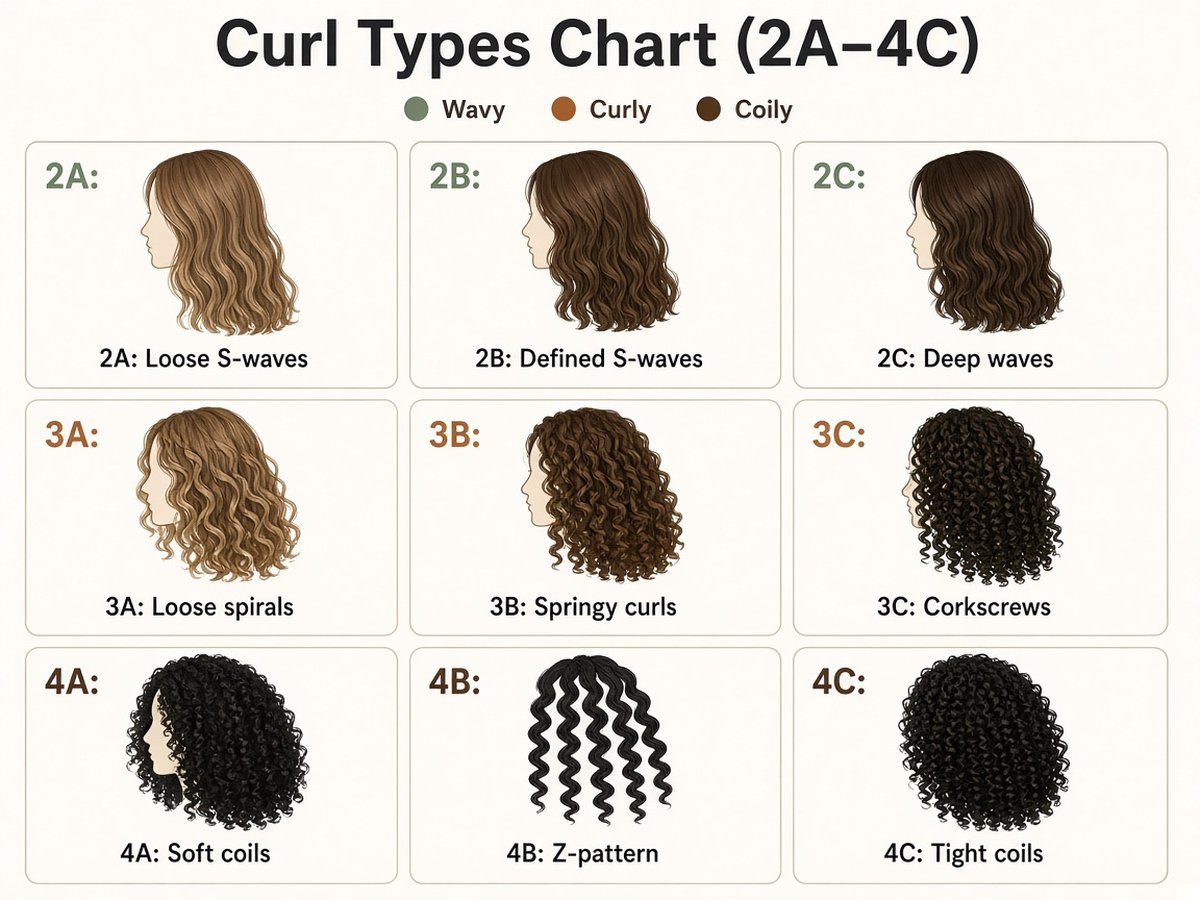
Curl types (also searched as curly hair types) group wave, curl, and coil patterns from 2A to 4C. This curl type chart is a map: it helps you pick wash-day products and routines that match your pattern—not a personality test and not a substitute for porosity.
Choosing between waves and spirals? The wavy vs curly hair comparison covers that decision without repeating this full chart.
Scroll the chart, read the care snapshots, then confirm with find your curl type at home or start Curltine for a photo-based check plus porosity.
Quick answer
There are three families: wavy (2A–2C), curly (3A–3C), coily (4A–4C). Your letter is about pattern shape. Porosity and density are separate—and they change which products actually work.
Curl types chart (2A to 4C)
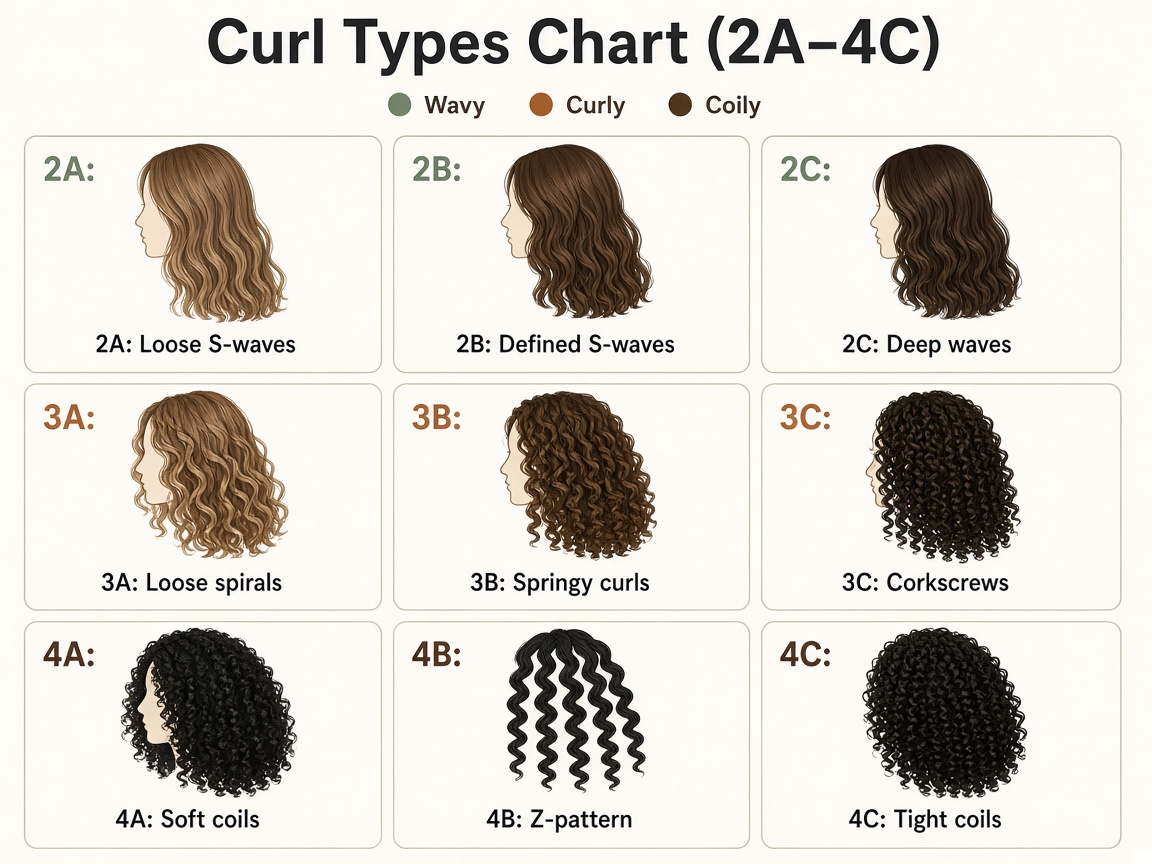
| Type | Pattern (plain English) | Care focus | Deep guide |
|---|---|---|---|
| 2A | Loose, stretched S-waves | Lightweight leave-in + light hold | 2A hair |
| 2B | Clearer S-waves, more texture | Light cream + gel | 2B hair |
| 2C | Deep S-waves; ends may coil | Medium hold; frizz control | 2C hair |
| 3A | Loose spirals / ringlets | Moisture + definition gel/cream | 3A hair |
| 3B | Springy, tighter curls | Balance moisture/protein; gel cast | 3B hair |
| 3C | Tight corkscrews; dense | Slip for detangling; strong moisture | 3C hair |
| 4A | Soft coils, S-shaped when stretched | Moisture retention; gentle detangle | 4A hair |
| 4B | Z-shaped bends; less clump | Deep moisture; protective habits | 4B hair |
| 4C | Tightest coils; high shrinkage | Maximum moisture + low manipulation | 4C hair |
Pro tip: Many people are mixed—e.g. 2C on top, 3A underneath. Pick products for the tighter pattern on wash day, then adjust amount by section.
How to use this curl types chart (without overthinking it)
- Look at dry, product-light hair in natural light (or wet + scrunched with light gel).
- Match mid-lengths and ends first—roots often look looser.
- Choose the closest letter, then open that type guide.
- Run a hair porosity test—do not skip this.
- Build a beginner curly hair routine from type + porosity, not from TikTok alone.
“Curl levels,” “curl numbers,” and other names
People search curl types, curly hair types, curl type chart, curl levels, curl numbers, and hair curl types. They usually mean the same 2A–4C system. Magazines may use photos; salons may use different names. If a stylist says “type 3,” ask whether they mean 3A, 3B, or 3C—the care difference is real.
Curl type vs porosity vs density
| What it means | Why it matters | |
|---|---|---|
| Curl type | Shape of the wave/curl/coil | Hold level, cut, definition method |
| Porosity | How fast hair absorbs/loses moisture | Product weight, water temp, protein |
| Density | How many strands on your head | How much product you need |
Getting curl types right but porosity wrong is why “my type’s holy grail” fails. Start here: porosity test · low porosity routine · high porosity routine.
Care by type family
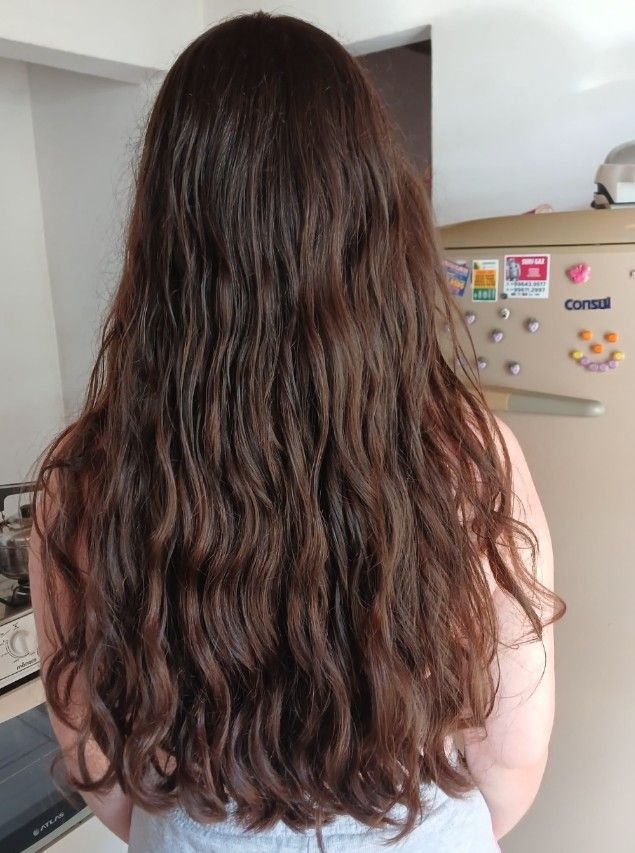
Wavy (2A–2C)
Lightweight layers, respect frizz on 2C, don’t steal routines from coily creators wholesale. Guides: 2A · 2B · 2C.
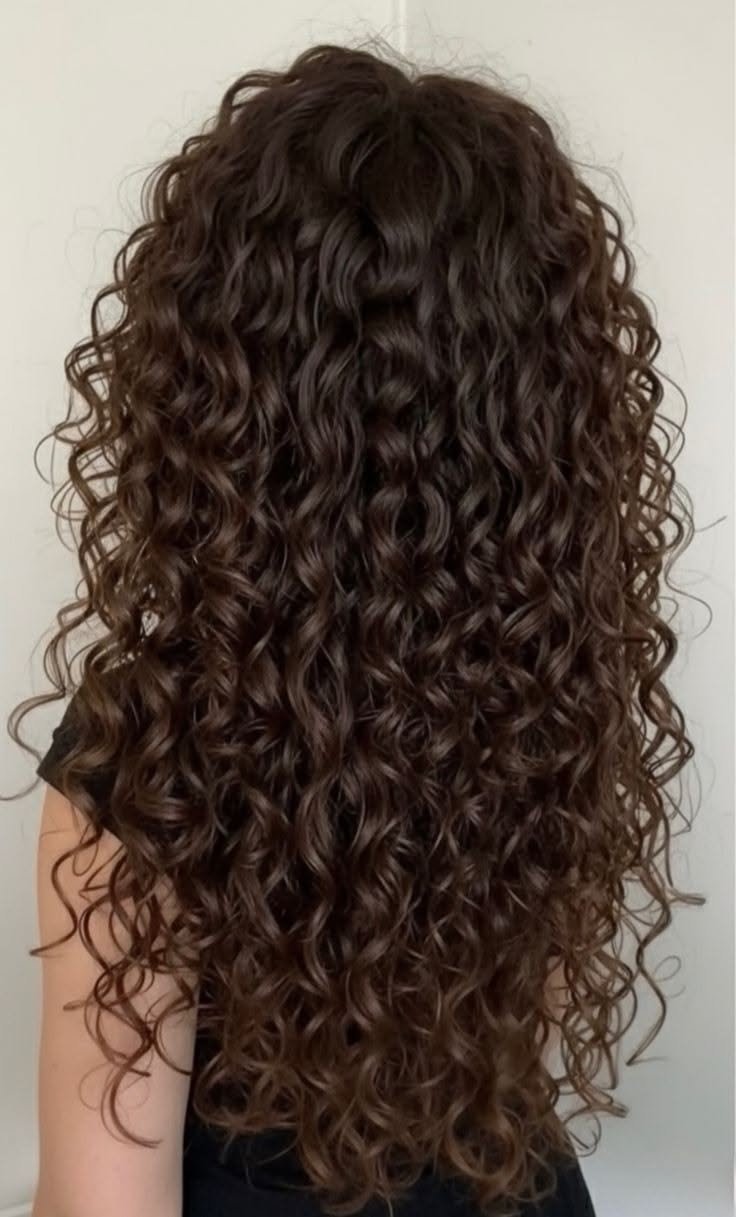
Curly (3A–3C)
Definition + moisture balance; gel casts and careful drying matter. Guides: 3A · 3B · 3C.
Coily (4A–4C)
Moisture retention, gentle detangling, shrinkage literacy, protective styling options. Guides: 4A · 4B · 4C.
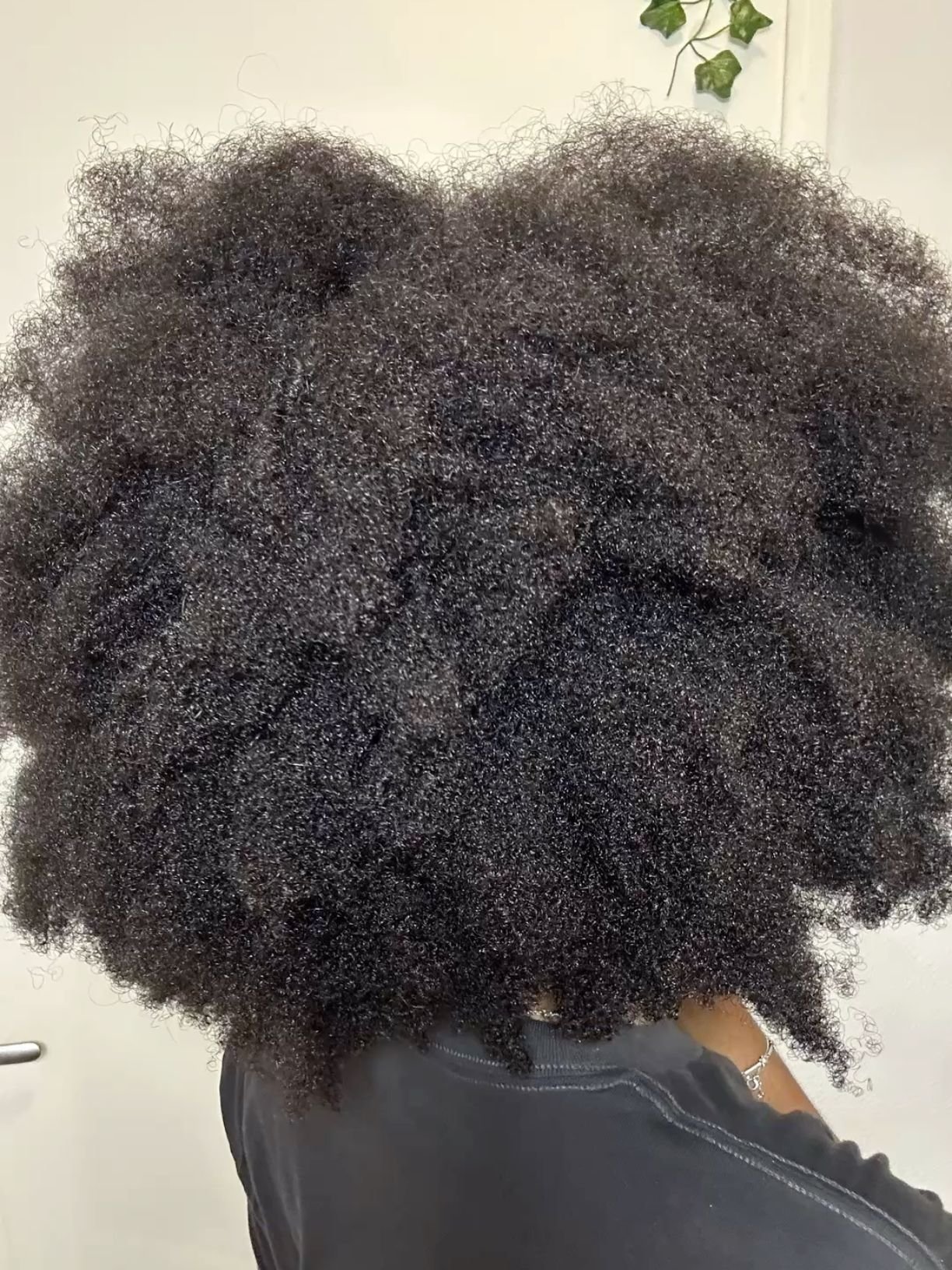
Shared wash-day backbone: wash-day routine.
Chart vs quiz vs scan
| Method | Best for | Limit |
|---|---|---|
| This curl types chart | Fast visual map | Easy to mis-type from one selfie |
| At-home checks | Slow, careful ID | Still subjective |
| Curltine scan | Pattern + routine + product fit | Needs a clear photo |
Use the chart to learn the language; use a scan when you want a routine you can follow next wash day.
Common curl typing mistakes
- Typing freshly straightened or heavily brushed hair.
- Ignoring mixed patterns.
- Confusing frizz with “a tighter type.”
- Copying 4C moisture routines onto fine 2A.
- Never re-checking after a big cut or damage repair.
Frequently asked questions
How many curl types are there?
In the common chart: nine wavy-to-coily types (2A–4C), plus straight type 1 in some systems.
Can I have more than one curl type?
Yes. Mixed patterns are normal. Care for the tighter sections so they don’t dry out.
Is 2A considered curly?
2A is wavy. People still search “2a curly hair”—same pattern family conversation, different letter.
What’s the difference between 3B and 3C?
3B = springy curls; 3C = tighter corkscrews with more density. See 3B vs 3C.
Does curl type change over time?
Heat, color, hormones, and cut change how curls show. Your range is genetic; health changes the reveal.
What’s the best way to confirm my curl type?
Chart + second opinion photo + porosity. Fastest combo: this page + Curltine.
Related guides
- Find your curl type at home
- Curly hair routine for beginners
- Hair porosity test
- How to fix frizzy curly hair
Start with your actual pattern, not a guess
The best curl types chart still can’t see your porosity or the bottle in your shower. Start Curltine to match curly hair types to a routine you can run this week.
Curl charts are educational tools. Patterns vary by person, lighting, and styling. When in doubt, prioritize hair health over the letter.
Curltine
Explore Curltine
See the app overview and check current features and access before downloading.
View Curltine