Twist-Out on Curly Hair: Steps, Product Weight, Day-2
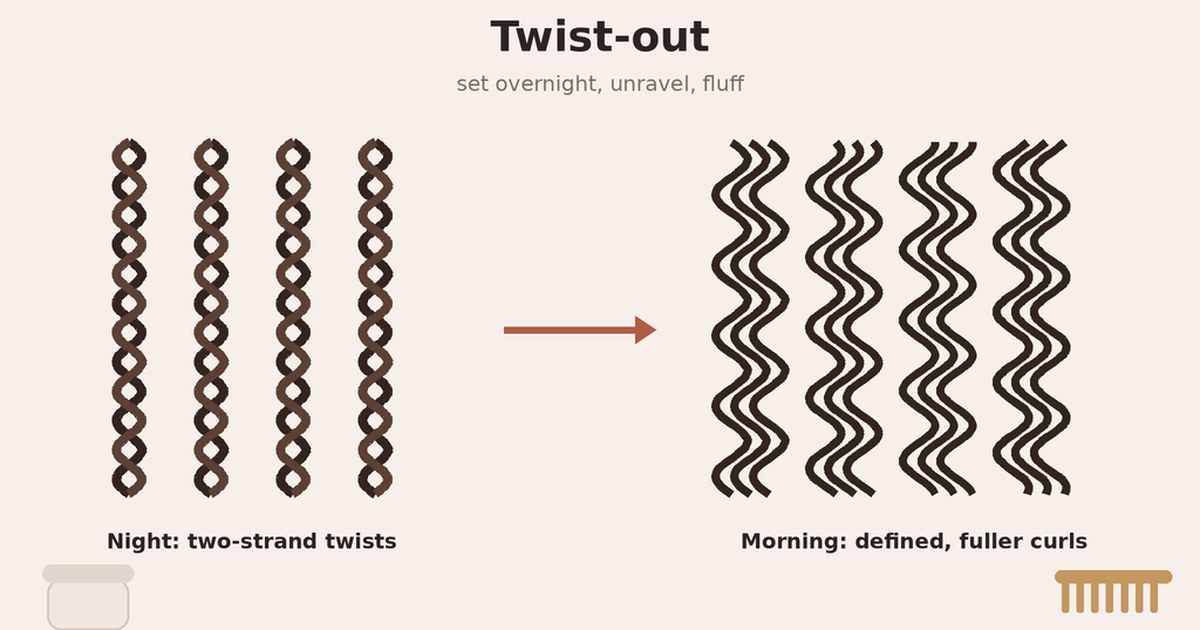
A wash-and-go looks great until humidity, a cotton pillowcase, or one too many finger-rakes turn it into a halo of frizz. A twist-out on curly hair is the classic middle path: you set definition in two-strand twists, dry fully, then unravel into stretchy, clumped curls that often last longer than a single gel cast. Get product weight or drying wrong, though, and you unravel into frizz instead of curls.
This guide covers what a twist-out is (versus keeping twists in as a protective style), the full step-by-step from cleanse to fluff, how to match cream and gel weight to waves versus coils and high versus low porosity, Day-2 refresh that actually works, and the mistakes that ruin definition before you leave the house.
Quick answer
A twist-out is a set-and-release style: you apply leave-in (and usually cream and/or gel) on damp hair, twist sections into two-strand twists, dry them completely, then gently unravel and separate for volume. Definition comes from the twist pattern and product hold; longevity comes from full drying, gentle unraveling, and satin sleep.
Twist-outs suit most patterns from about 2C–4C, with section size and product weight doing more work than a single “best” brand. Waves often need lighter layers and larger sections; coils can take more cream and smaller or medium twists. Keeping twists in is more protective; taking them out is the style. For overnight shape between wash days, pair this with the pineapple method and how to sleep with curly hair.
If you want product order and porosity matched to your hair before the next install, Curltine’s AI scan and routines or the Curltine app can sketch a wash-day + style week without guessing from a photo alone.
Start with a Curltine hair scan
Twist-out vs keeping twists in (protective)
| Approach | What you wear | Manipulation | Best when |
|---|---|---|---|
| Twists left in | The twists themselves | Low day-to-day | Busy stretch; ends need shelter; protection is the goal |
| Twist-out | Unraveled curls with twist “memory” | Higher on install + unravel days | You want defined volume for days 1–3+ |
| Wash-and-go | Clumps set with gel/cream, no twists | Medium on wash day | Faster set; less stretch than a twist-out |
A twist-out is a definition tool, not automatically a protective style. Protection shows up when you leave twists in, pineapple at night, or reduce daily combing. Unraveling every morning for a “fresh” out defeats both protection and the set.
Step-by-step: cleanse → fluff
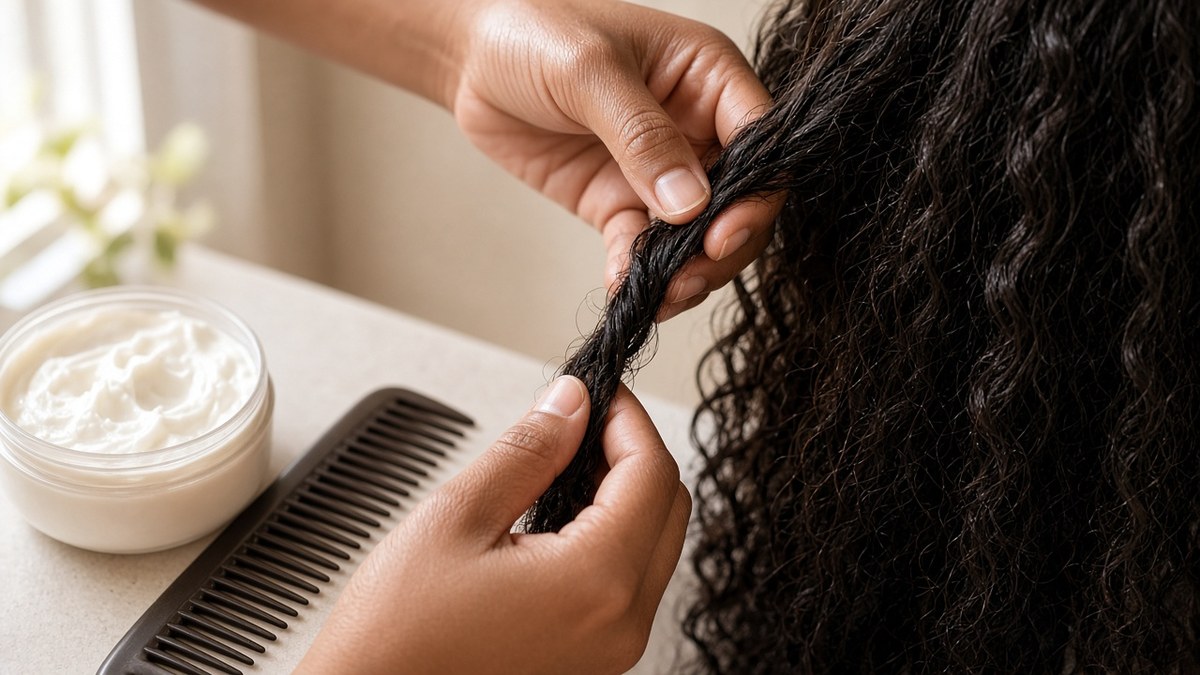
Work on a real wash day—clean scalp, detangled lengths, moisture already in the hair—not on dry, product-caked strands.
1. Cleanse
Shampoo or co-wash based on buildup and scalp needs. Clarify when layers feel sticky; residue under twists often means dull, crunchy outs. Rinse thoroughly.
2. Condition and detangle
Condition with slip. Detangle in sections with fingers or a wide-tooth tool while hair is wet. Knots left in become frizz knots at unravel.
3. Leave-in on damp (not dripping) hair
Blot to damp. Apply a water-based leave-in from mid-lengths to ends, roots if your scalp tolerates it. This is the hydration base—skipping it and loading cream alone is a common frizz setup, especially on high porosity hair.
4. Cream and/or gel — weight by porosity and pattern
This is where twist-outs succeed or fail. See the product-weight section below. Rule of thumb: enough to coat and clump, not enough to look white and pasty once you twist.
5. Choose twist size
- Larger / chunkier sections: faster install, more volume, looser wave pattern, often kinder for fine or 2C–3A hair.
- Medium sections: the everyday sweet spot for most 3B–4A heads.
- Small sections: tighter definition and more stretch; longer install; more frizz risk if you unravel aggressively or sleep without satin.
Tension should feel snug, not scalp-migraine tight. Painful roots are not “definition insurance.”
6. Dry fully before you unravel
Air-dry, hooded dryer, or a diffuser on low. Twists must be dry to the touch—roots and tips. Unraveling damp twists is the fastest way to a frizzy, undefined out. Overnight drying under a satin bonnet works if hair is mostly dry before bed; soaking-wet twists under plastic invite odor and weak strands.
7. Unravel technique
Oil or serum a tiny amount on your fingertips (optional). Unravel from ends toward roots, gently. Do not rake through. Separate each twist into 2–4 pieces for volume only after the whole head is out—over-separating = frizz.
8. Fluff at the roots
Lift at the root with fingertips or a pick used only at the scalp, not through the curl lengths. Shape the silhouette; stop when volume looks good. More fluff is not always more definition.
Then lock in the night routine: satin, pineapple if length allows, and resist the urge to “fix” with dry hands every hour.
Product weight: waves vs coils, high vs low porosity
Product weight is not morality—it is physics. Hair that absorbs fast (often high porosity) drinks leave-in and still wants a cream seal. Fine waves collapse under butter. Matching weight to pattern and porosity beats copying a 4C tutorial on 2B hair.
By pattern (directional, not rigid)
| Pattern | Lean toward | Watch-out |
|---|---|---|
| 2A–2C waves | Light leave-in + light gel or foam; large twists | Heavy cream = greasy flat twists |
| 3A–3B | Leave-in + light cream or cream-gel; medium sections | Too much gel crunch without enough moisture underneath |
| 3C–4A | Leave-in + cream + light-to-medium gel | Skipping gel can mean day-1 frizz in humidity |
| 4B–4C | Richer cream layers, gel or custard for hold; medium or small twists | Oil-only “prep” on dry hair → brittle outs |
By porosity
- Low porosity: Prefer lighter layers, warm water or gentle steam for absorption, less dense butter. Products that sit white on the strand will sit white inside the twist.
- High porosity: Water-based leave-in first, then cream to help seal; gel helps hold the set through humidity. Ends often need more than roots.
- Normal / mixed: Medium cream, gel on the outside of the twist or as a last skim—adjust after one trial week, not after one Instagram reel.
If you are unsure where you land, a simple porosity check plus Curltine’s product context in Routines beats random jar stacking. Ingredient checkers help when a cream pills or a gel turns sticky under twists—sometimes the formula, not your hands, is the issue.
LOC / LCO note
Twist-outs play well with moisture layering. Many people run leave-in → cream → gel (a styling cousin of LCO) on wash day, then twist. Others prefer leave-in → oil → cream when hair is very dry. Use what already works in your curly hair routine; the twist is the set, not a reason to invent five new products overnight.
Day-2 (and Day-3) refresh
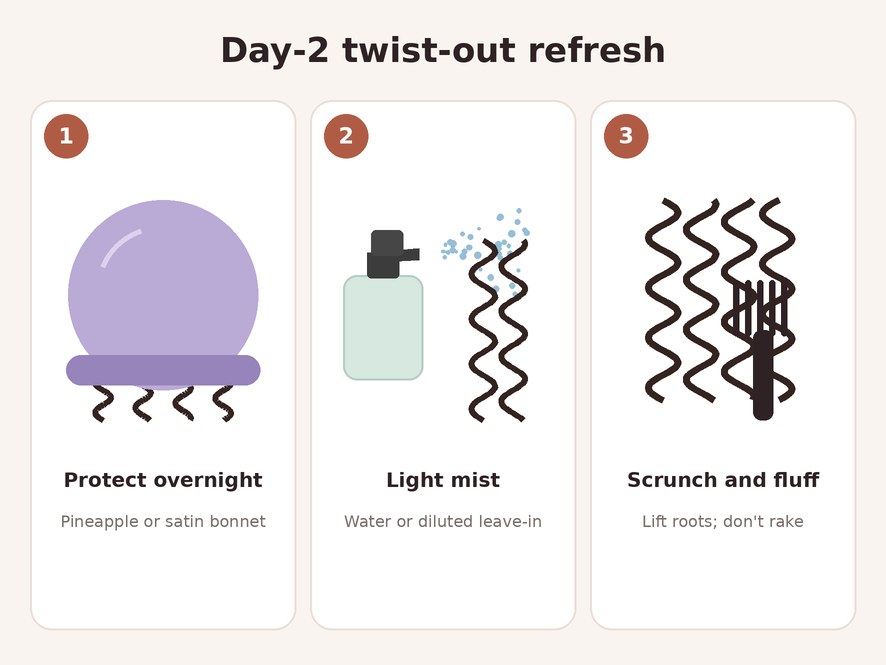
Day-1 is the install. Day-2 is where twist-outs earn their reputation—if you sleep and refresh with intention.
Overnight
- Pineapple (loose high or mid puff with a satin scrunchie) if you have length; otherwise a satin bonnet or silk pillowcase over the style.
- Do not sleep on cotton with an uncovered twist-out and expect Day-2 miracles.
- Avoid tight elastics that dent the crown.
Details: pineapple method for curly hair and sleep with curly hair.
Morning mist + scrunch
- Take the pineapple down gently.
- Mist with water or diluted leave-in—light fog, not a rewash.
- Smooth a drop of leave-in or cream on frizzy outer pieces only.
- Scrunch upward to wake clumps; fluff roots if flat.
- Optional: tiny oil on ends for shine—not a scalp oil bath.
When to re-twist
Re-twist only the sections that completely lost shape (often crown or edges), on slightly damp hair, and dry those pieces before you leave. Full-head nightly re-twisting is a new install, not a refresh—and it raises manipulation.
When to wash again
When scalp needs cleansing, product feels grimy, or definition will not revive without soaking the hair. Stretching with satin and mist is smart; stretching past comfort is how itch and buildup win.
Common mistakes (and quick fixes)
Unraveling while twists are still damp
Fix: Wait. Hooded dryer, more air time, or sleep on mostly dry twists under satin. Patience is cheaper than a redo.
Too much cream
White cast, greasy twists, limp outs.
Fix: Emulsify less product with water in hands; focus cream on ends; use gel for hold instead of more butter.
Tiny sections that frizz at unravel
Micro-twists plus aggressive separating = fluff ball.
Fix: Size up. Separate each twist fewer times. Oil fingertips lightly when unraveling.
Sleeping without satin
Cotton roughens the cuticle overnight—classic frizz lever.
Fix: Bonnet, scarf, or silk/satin pillow every night the out is up.
Touching dry hair all day
Fix: Hands off. Refresh once in the morning; mist if needed; stop sculpting in bathroom lighting.
Skipping detangle on wash day
Fix: Sectioned detangle with slip before any twisting. Twists do not magically untangle knots.
Confusing twist-out with “set and forget for two weeks”
Fix: Plan scalp comfort and a take-down or rewash window. If you want true low manipulation for longer, leave twists in as the protective style.
Frequently asked questions
How long does a twist-out last on curly hair?
Often 2–5 days with satin sleep and light refresh, depending on humidity, porosity, and how much you touch it. Some coils stretch a week; fine waves may want a sooner wash.
Should I twist on wet or damp hair?
Damp is the usual sweet spot—product distributes, drying time stays reasonable. Soaking wet means hours of dry time and mildew risk if you cover too soon.
Gel, cream, or both?
Many curl patterns like leave-in + cream + gel (or cream-gel). Waves may skip heavy cream. Coils often want both moisture and hold. Trial one change at a time.
Can type 2 wavy hair do a twist-out?
Yes—with larger sections and lighter products. Expect a wavy bend more than a coil. If twists feel sparse, try a braid-out or wash-and-go instead of forcing tiny twists.
Is a twist-out better than a braid-out?
Different set patterns. Twist-outs often look softer and more spiral; braid-outs can look more stretched and piecey. Try both on your density before declaring a winner.
Do I need heat to dry?
No. Heat (hooded dryer) speeds drying and can improve set consistency; air-drying works if you wait until fully dry. Diffusing on low is a middle path.
Soft next step with Curltine
Twist-outs work when section size, product weight, and drying match your pattern and porosity—not a single creator’s routine screenshot.
- AI hair scan estimates curl pattern (2A–4C), porosity, and density
- Routine builder can place wash day, twist install, and Day-2 refresh on a real calendar
- Product ingredient context helps you spot heavy butters or sticky gels before they cement inside twists
Curltine is available on the App Store and Google Play, with a free plan. Start from Routines or the Curltine app, then treat the twist-out as one tool beside wash-and-gos and protective installs—not a loyalty test.
Dry fully, unravel gently, sleep on satin, mist lightly, and resist the mid-day fluff spiral. That is most of the “secret.”
Curltine
احصلي على روتين تجعيدك المخصص
امسحي شعرك بالذكاء الاصطناعي خلال 60 ثانية واحصلي على خطة يوم غسيل تناسب نوع شعرك ومساميته وكثافته.
ابدئي خطتك