Protective Styles for Curly Hair: Low-Manipulation Options

Wash day took an hour. By Wednesday you are yanking through knots, re-geling the same sections, and wondering why ends look thinner. Protective styles for curly hair—braids, twists, buns, and other low-manipulation setups—exist to give your hands (and your cuticles) a break between washes. Done with too much tension or left in too long, they can undo the length you were trying to keep.
This guide covers what counts as protective for curls and coils, low-tension options by pattern and lifestyle, how to install and take down without a breakage festival, and when a simple pineapple or wash-and-go is the better “protect.”
Quick answer
A protective style for curly hair is any style that reduces daily combing, tugging, and environmental friction while your ends are tucked or gathered away from constant handling. Classic options include chunky two-strand twists, flat twists, braid-outs left in as the style, loose braids, low buns, and (for longer coils) cornrows or chunky box braids with careful tension. Protection comes from low manipulation and low tension, not from how Instagram-ready the install looks.
Protective styles work best when hair is clean, moisturized, and detangled first; when edges and parts are not yanked; and when you moisturize and cover at night. They are not a cure for heat damage, a substitute for wash day, or permission to ignore scalp cleanliness for months. For overnight protection without a full install, start with the pineapple method and how to sleep with curly hair.
Match the style to length, density, and how often you can care for it—or build a low-manipulation week inside Curltine’s routine builder.
Start with a Curltine hair scan
What “protective” actually means (and what it doesn’t)
In curly and coily communities, “protective” usually means ends are shielded and daily styling stress drops. The goal is fewer wet detangles, fewer brush-throughs on dry hair, and less rubbing against coats, seatbelts, and cotton pillows.
| Element | Why it helps |
|---|---|
| Ends tucked or gathered | Less snagging, weathering, and split-end travel |
| Fewer daily restyles | Cuticles take less mechanical wear |
| Soft hold / low tension | Style stays without yanking follicles |
| Night cover | Satin/silk reduces friction while you sleep |
What protective styles are not:
- A guarantee of faster growth (growth happens at the scalp; styles mainly help retention by reducing breakage)
- “Set and forget for three months” with zero cleansing
- Only cornrows, box braids, or salon installs—simple twists and buns count
- Safe by default if the install is painfully tight
Think of protection as borrowing time between wash days so you are not reworking the same clumps every morning. Length retention math shows up later in this calendar; for now, treat breakage reduction as the practical win.
Who protective styles suit (pattern, length, lifestyle)
Curl pattern (2A–4C)
Pattern shapes which styles hold and which feel like overkill:
- 2A–2B waves: Heavy braids often look sparse or pull. Prefer soft low buns, loose braids, claw-clip updos, or a silk-wrapped pineapple. Skip high-tension cornrows unless a stylist who understands fine waves is doing them.
- 2C–3B: Two-strand twists, flat twists, braid-outs worn as the style, and low puff/buns are popular. Medium chunk sizes usually hold without needing tiny, high-stress parts.
- 3C–4C: The widest menu—chunky or medium twists, braid-outs, flat twists, cornrows, wigs/weaves over well-cared-for natural hair, and wash-and-gos left alone under a bonnet. Coils often thrive when ends stay tucked; tension at the hairline still matters.
Curl pattern for definition; tension, moisture, and how often you touch your hair for whether the style is actually protective.
Length and density
- Short / tapered: Mini twists, short flat twists, or simply a satin bonnet routine may protect more than forcing a style that needs length.
- Shoulder to mid-back: Sweet spot for DIY twists, braid-outs, and low buns.
- Long + dense: Section well; under-detangled installs mat and break at take-down. Budget time for parting and moisture—or go larger sections.
Lifestyle
- Gym / sweat days: Styles that keep hair off the neck (pineapple, high puff with soft tie, chunky twists) beat daily re-styling; cleanse the scalp on a schedule that matches sweat, not only Instagram timelines.
- Office / uniforms: Low bun or flat twists under a soft scarf can cut friction from collars.
- Low time budget: Fewer, chunkier sections beat 200 micro-braids you will resent at take-down.
If porosity makes products behave unpredictably under a style, confirm habits with a hair porosity test or Curltine’s AI hair scan so leave-ins and oils match how fast your hair dries out.
Low-manipulation options (ranked by effort)
1. Soft updos and pineapples (lowest install effort)
Loose high or mid pineapple, claw-clip bun, or low puff with a satin scrunchie. Ends are up; manipulation is near zero after you set it. Best overnight and between wash days when you do not want a full twist session. Details: pineapple method for curly hair.
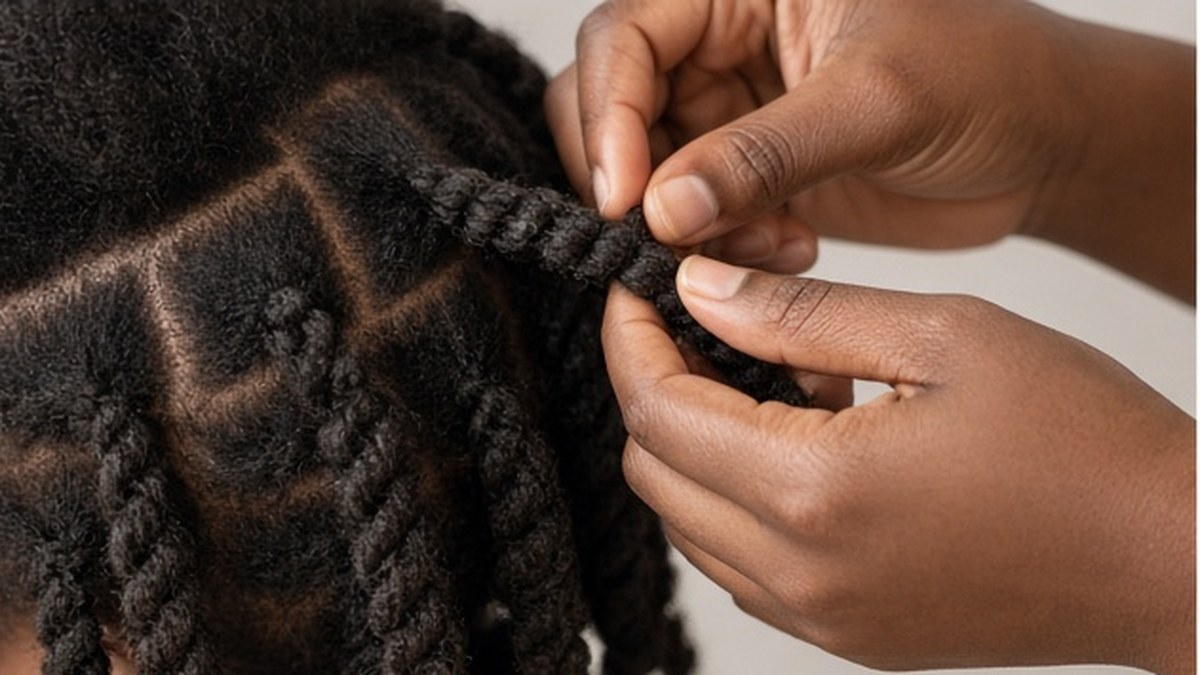
2. Two-strand twists (DIY workhorse)
On clean, detangled, damp hair: leave-in, optional cream, twist in medium sections, air-dry or sit under a hooded dryer, then either keep twists in or unravel for a twist-out. Keeping twists in is often more protective than unraveling every other day. Aim for tension you barely feel at the root after 20 minutes.
3. Flat twists and braid-outs worn as the style
Flat twists along the scalp can look polished with less bulk than a full head of hanging twists. Braid-outs: braid, dry fully, unravel gently—or leave braids in for true protection and save the “out” for an event.
4. Cornrows and chunky box braids (higher skill / salon)
Excellent when tension is moderate, parts are clean, and you can moisturize mid-install. Risk rises with tiny braids, glued edges, and “scalp migraine” tightness. If your edges sting for hours, it is not protective—redo or loosen.
5. Wigs, clips, and sew-ins (protection of your hair underneath)
These protect only if the natural hair beneath is clean, detangled, moisturized, and not braided bone-tight for months. The accessory is not magic; the base care is.
| Style | Best when | Watch-out |
|---|---|---|
| Pineapple / soft bun | Nightly or busy weeks | Needs some length; tie too tight dents curls |
| Two-strand twists | DIY; 3A–4C especially | Undried twists = mildew smell, frizz at unravel |
| Flat twists | Polished low-manipulation days | Edge tension if parts are tiny |
| Braid-out (left in as braids) | Want definition later and protection now | Unraveling too soon frizzes; over-unraveling daily kills the point |
| Cornrows / box braids | Longer break from daily styling | Tension, duration, and scalp care |
| Wig / weave over healthy base | Maximum styling flexibility | Neglecting the hair underneath |
Prep: install only on clean, detangled hair
Protective styles fail loudly when they go in on matted, product-caked, or half-detangled hair.
- Cleanse on a schedule that matches buildup and sweat—co-wash or shampoo as your scalp needs, not a viral “never shampoo” rule. Clarify when layers feel sticky before a long install.
- Condition and detangle in sections with fingers or a wide-tooth tool while hair has slip. Do not braid through knots and hope.
- Moisture before lock-up. A water-based leave-in (and cream if your density wants it) on damp hair helps strands flex inside the style. Heavy oil-only “prep” on dry hair often means dry, brittle hair inside a pretty braid.
- Dry enough before sealing under a bonnet for sleep. Soaking-wet braids under a plastic cap overnight invite odor and weakened strands. Air-dry or sit under gentle heat until at least mostly dry.
- Map your week. Pair the install with the rest of your curly hair routine and beyond wash day plan so you know when you will mist, oil ends lightly, and cleanse the scalp.
Product weight still follows porosity and density—the same logic as moisture layering on wash day. If creams pill or sit on top under twists, check ingredients (or Curltine’s product checker) before blaming the style.
During the style: scalp, moisture, and friction
Scalp comfort
Itch in week one can be dryness, product residue, or tension. Part rows gently; use a light scalp oil or mist on the skin, not a soaking of the braid shaft every day. Pain that radiates or bumps that look infected need the style out and, if needed, professional care—not more oil on top.
Moisture without daily unraveling
Mist exposed ends and the outer braid/twist with water or diluted leave-in. Seal ends with a tiny amount of cream or oil if they feel rough. Bake-in “butter every night on the whole head” often means buildup and dull, sticky hair at take-down.
Night routine
Satin bonnet, silk pillowcase, or scarf over the style. Pineapple over long twists if length still rubs. Friction is still a frizz lever even when hair is braided.
How long to keep it in
There is no universal number. DIY twists might be 1–2 weeks; salon braids often 4–8 weeks depending on growth, tension, and cleanliness. Take down when: matting at roots is advancing, scalp will not stay comfortable, ends look shredded, or you cannot cleanse reasonably. “Until it falls out” is not a retention strategy.
Take-down without the breakage spiral
Take-down is where many “protective” months lose the length they saved.
- Schedule enough time. Rushed take-down = ripped ends.
- Add slip. Oil or conditioner on the braid/twist before unraveling; work small sections.
- Unravel from ends upward, supporting the section—do not yank the root free while the end is still knotted.
- Detangle gently after, still with slip, then cleanse to remove the weeks of product.
- Trim what is shredded if ends are past saving; a small dusting can stop splits from traveling.
After take-down, give hair a simple wash-day reset before the next install. Back-to-back tight styles with no recovery week is how edges thin.
Common protective-style mistakes (and quick fixes)
Tension that “loosens later”
If it hurts now, follicles are already under stress.
Fix: Redo looser. Protective means you forget the style is there—not that you endure it.
Installing on dirty or tangled hair
Fix: Full cleanse + sectioned detangle first. Ever.
Treating braids as zero-wash
Fix: Scalp cleansing on a realistic schedule (diluted shampoo along parts, apple-cider or scalp treatments you already tolerate, or a stylist cleanse). Sweat and buildup do not pause for aesthetics.
Unraveling every morning for a fresh twist-out
Fix: If the goal is protection, leave the twists or braids in. Save frequent outs for weeks when you accept more manipulation.
Ignoring short hair and waves
Forcing a type-4 salon menu onto fine 2A hair is how people decide “protective styles aren’t for me.”
Fix: Choose soft updos, loose braids, and silk sleep gear. Protection scales to your texture.
Skipping night cover because “it’s already braided”
Fix: Fabric friction still roughens the outer strand and edges. Bonnet or silk pillow anyway.
Confusing protection with permanent progress
Fix: Track breakage and shed hairs in the brush/take-down towel, not only how long the install lasted. Retention is the outcome; the style is the tool.
Protective style vs wash-and-go vs nightly pineapple
| Approach | Manipulation | Best for | Tradeoff |
|---|---|---|---|
| Protective install (twists/braids) | Low day-to-day; high on install/take-down days | Busy stretches; ends that snag | Time cost; tension risk |
| Wash-and-go + sleep protection | Medium on wash day; low if you stop touching | Definition lovers; shorter weeks | Weather and pillow can still frizz |
| Nightly pineapple / bun | Very low | Medium–long curls between washes | Not a full “install”; needs length |
Many people rotate: wash-and-go for a week, chunky twists for two, then a recovery wash week. That rotation beats one extreme year-round. Soft CTAs aside, you can sketch that rotation in Routines once you know pattern and porosity.
Frequently asked questions
Do protective styles make curly hair grow faster?
They do not change how fast your follicles produce hair. They can help you keep more of what grows by cutting breakage and weathering—so length shows sooner.
Are protective styles only for type 4 hair?
No. Any pattern can use low-manipulation styling. The menu changes: waves lean soft updos; coils have more braid/twist options.
Can I exercise with protective styles?
Yes—choose styles that manage sweat (pineapple, high puff, twists) and cleanse the scalp as needed. Tight braids plus daily sweat with no cleanse is a itch-and-bump setup.
How do I moisturize without taking the style down?
Mist water or diluted leave-in on ends and along parts; light seal on ends only. Avoid daily heavy butters on the entire braid shaft.
What if my edges are thinning?
Stop high-tension styles, gel-slicked baby hairs under stress, and tight ponytails. See a professional if shedding seems sudden or patchy. Soft styles and recovery time matter more than another edge serum alone.
Is a silk press or blowout “protective”?
Straight styles can reduce daily tangle for some people, but heat and tension wrap habits can cost more than they save. Count tool heat and how you sleep on straightened hair before calling it protective.
Soft next step with Curltine
Protective styles work when they match your length, pattern, scalp needs, and calendar—not a single salon photo.
- AI hair scan estimates curl pattern (2A–4C), porosity, and density
- Wash-day and multi-day routine builder can include low-manipulation weeks beside cleanse and style steps
- Product ingredient checker helps you pick leave-ins and light sealants that will not turn into cement inside braids
Curltine is available on the App Store and Google Play, with a free plan. Start from Routines or the Curltine app, then treat twists, braids, and soft updos as adjustable tools—not a personality test.
Protective styling is simple when you keep the definition honest: tuck the ends, drop the daily tug-of-war, keep tension kind, cleanse the scalp, and take down before mats win. Low manipulation beats high drama—every week you actually stick with.
Curltine
احصلي على روتين تجعيدك المخصص
امسحي شعرك بالذكاء الاصطناعي خلال 60 ثانية واحصلي على خطة يوم غسيل تناسب نوع شعرك ومساميته وكثافته.
ابدئي خطتك